The Sleep Census
8/10A burned-out statistician sent to audit a remote island’s flawless insomnia cure discovers the villagers haven’t dreamed in thirty years—and that something in the cliffs is feeding on the nightmares they no longer remember.
A highly atmospheric psychological horror concept with strong thematic depth and a compelling central mystery, slightly limited commercially by its dense, cerebral narrative and familiar genre influences.
After a public mental-health initiative collapses into mass psychosis across the mainland, government statistician Mara Vale is dispatched to the isolated island of Vaelor, a place famous for an impossible anomaly: nobody there dreams. The island has no violent crime, no suicides, and no recorded mental illness. Its residents sleep peacefully every night after participating in a ritual called the Census, where each citizen records their thoughts before bed inside a labyrinthine archive carved into sea cliffs. Mara, emotionally numb after her son’s death, arrives expecting fraud. Instead, she finds unnerving serenity, smiling residents with fragmented memories, and children incapable of describing fear.
As Mara audits decades of records, she begins suffering vivid night terrors no one else on the island can experience. The dreams depict malformed figures trapped behind the archive walls, begging to be remembered. Islanders insist dreams are a disease humanity outgrew, but Mara uncovers hidden census files revealing the island once suffered a massacre triggered by collective hallucinations. The Census was created to "extract" nightmares from the population and imprison them inside the cliff archive through obsessive confession and ritualized memory suppression. The imprisoned fears have since evolved into a single parasitic psychological entity that survives by erasing trauma from human minds—along with identity, guilt, grief, and eventually free will.
When the archive begins collapsing during a violent storm, the islanders descend into catastrophic psychological breakdowns as decades of suppressed terror flood back at once. Mara realizes the entity has targeted her unresolved grief because she alone still dreams fully. Forced to descend into the submerged lower chambers beneath the cliffs, she confronts manifestations built from the island’s stolen nightmares and relives the memory of her son’s death she has spent years statistically rationalizing away. To stop the entity from spreading to the mainland through the government audit network, Mara destroys the Census records and traps herself within the collapsing archive, restoring the islanders’ ability to dream at the cost of becoming the final mind left inside the darkness below.
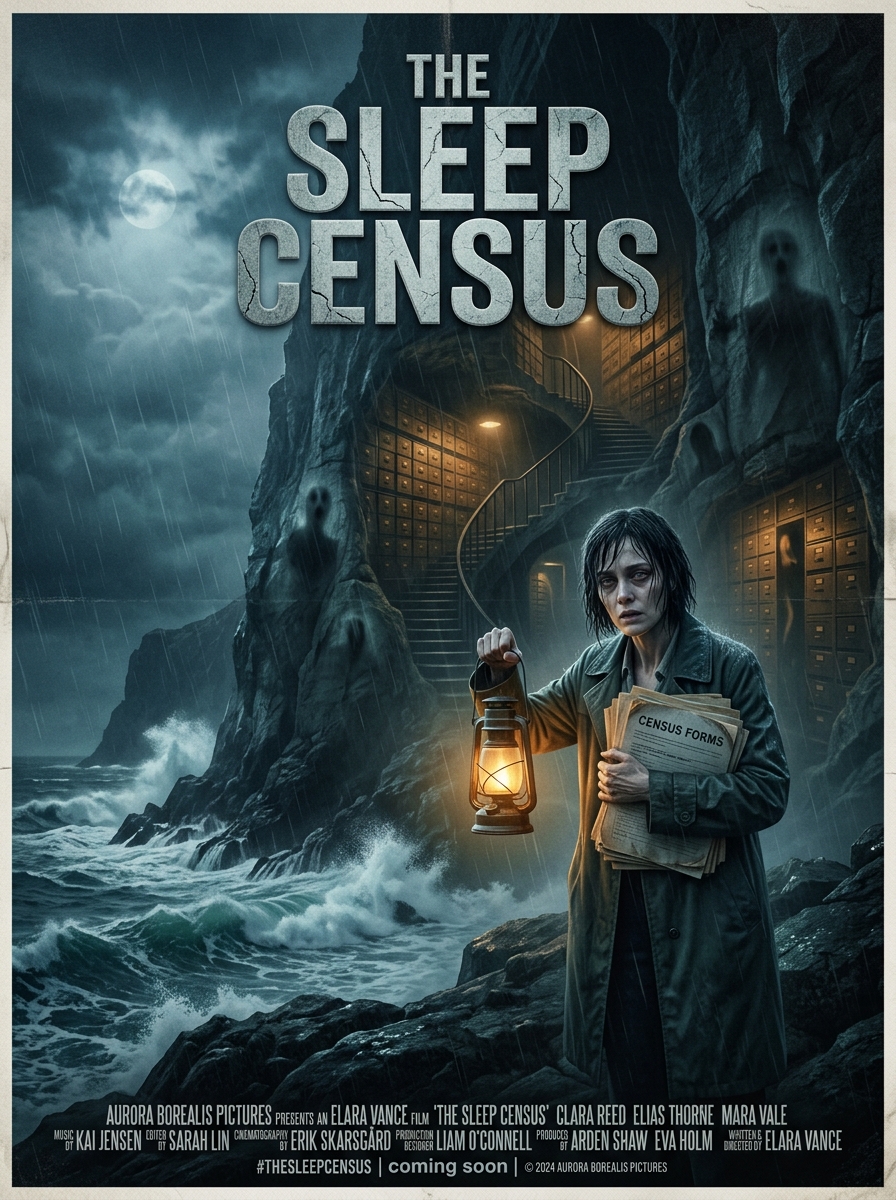
A cinematic psychological horror poster set on a storm-lashed black-rock island at night. In the foreground stands Mara Vale, a gaunt woman in her late 30s with short rain-soaked dark hair, pale skin, and exhausted eyes, wearing a government field coat and clutching a lantern and stacks of soaked census papers. Behind her rises a colossal cliffside archive carved with endless glowing drawers and stairways descending into darkness. Human silhouettes with blurred faces press faintly from inside the stone walls as if trapped beneath the surface. The ocean crashes violently below under cold moonlight. Color palette of deep slate blue, sea green, charcoal black, and sickly amber. Lighting is harsh and wet, with lantern glow cutting through dense fog. Mood is oppressive, cerebral, and uncanny. Visual style combines elevated psychological horror with stark Scandinavian noir realism and surreal nightmare imagery.