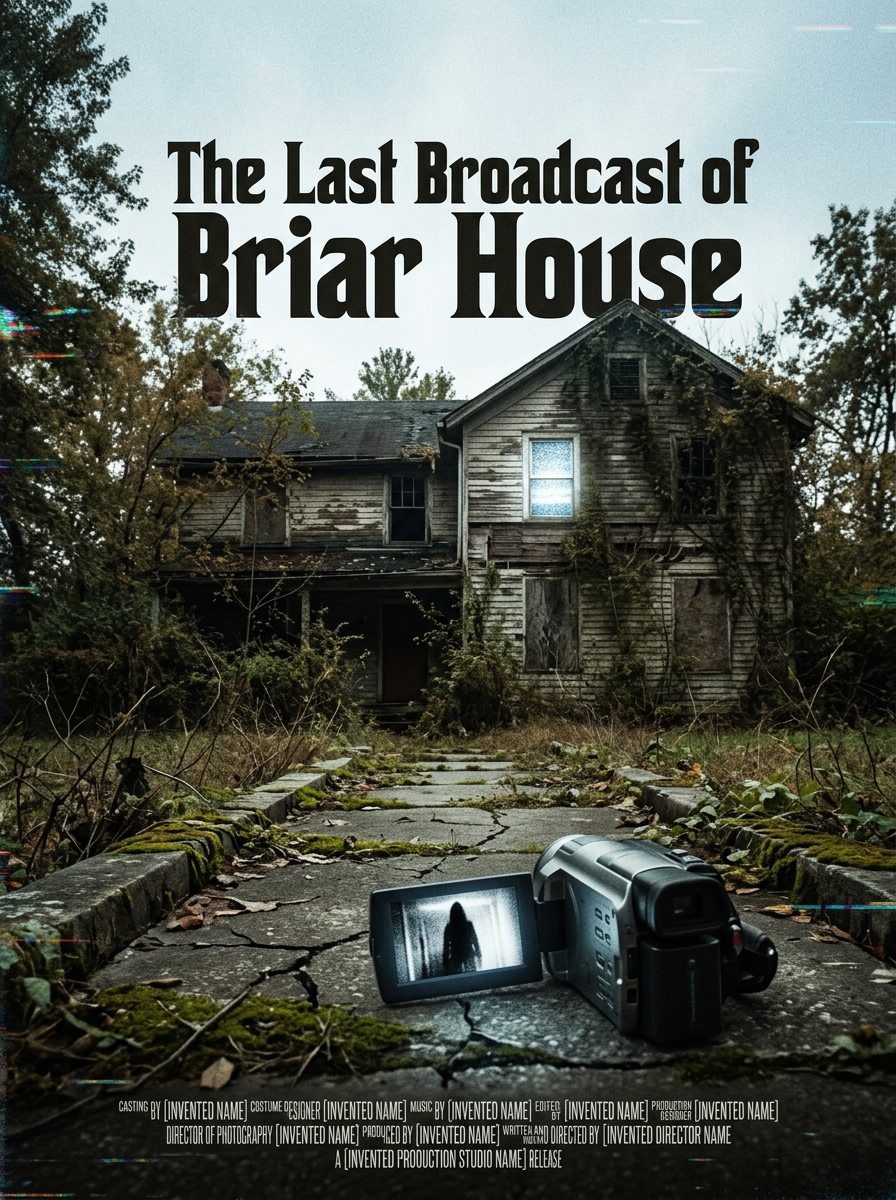
The Last Broadcast of Briar House
8/10A documentary team investigating a decades‑abandoned group home uncovers patient interview tapes that begin documenting the crew’s actions—before they occur.
Strong originality and atmosphere with solid commercial potential, though the high‑concept narrative risks some coherence challenges.
A small, gritty documentary crew travels to the rural ruins of Briar House, a shuttered group home infamous for its unexplained overnight evacuation in 1987. What begins as a vérité exploration of failed mental‑health systems shifts when they discover a cache of archival therapy tapes—tapes that contain sessions with patients who describe events the crew is experiencing in real time.
As the team digs deeper, the recordings escalate: voices of long‑dead residents narrate the crew’s movements, fears, and private conversations. Time-coded logs show dates decades in the past predicting their present moments with chilling accuracy. When members begin disappearing and reappearing on tape before missing in reality, paranoia fractures the group. They realize Briar House didn’t close because of neglect—it closed because the institution itself learned to observe, anticipate, and reshape behavior.
Desperate to escape, the survivors race to destroy the recording network buried beneath the facility. But the final tapes reveal something devastating: the documentary they believed they were making has already been “documented” by Briar House, and the only way to break free is to stop filming—and abandon the truth they sought. In the end, one crew member escapes into daylight, but the camera in her hands continues recording on its own.
Cinematic horror‑documentary poster. A decaying rural group home half-swallowed by overgrown trees; windows dark except for one glowing with flickering analog static. Foreground: a handheld camera lies on cracked pavement, its viewfinder showing a person standing behind the viewer though no one is there. Color palette: muted browns, sickly greens, cold blues. Lighting: diffused overcast daylight with eerie interior glow. Mood: unsettling, observational, claustrophobic. Visual style: gritty realism mixed with analog glitch aesthetic, subtle grain and desaturation.