Dust to Truth: The Last Riders of the Open Range
8/10A modern documentary team embedded with aging cowboys uncovers a buried frontier atrocity that survivors have hidden for decades—forcing them to choose between exposing the truth or honoring the code that kept them alive.
A compelling and original neo‑western mystery with strong emotional stakes, though its slow‑burn documentary style may limit mainstream commercial appeal.
A small documentary crew travels to a remote stretch of the high desert to chronicle the last living members of a dying cowboy tradition—an isolated group of elderly ranch hands who still ride the open range on horseback. Initially focused on capturing the beauty of a disappearing lifestyle, the filmmakers quickly notice the riders’ evasiveness about a vanished cowhand known only as “Red Jack,” whose name triggers a tense silence among those interviewed.
As the crew digs deeper, they discover fragments of an unspoken event from the 1960s: a violent standoff between ranchers, a corrupt land company, and a drifter accused of a crime no one can fully describe. Old letters, burnt boundary markers, and half-buried cattle bones point toward a long‑suppressed truth. Interviews turn combative, especially when one aging rider—now frail but sharp—offers to lead them to “the place no one rides.”
The final revelation forces a moral reckoning: Red Jack wasn’t a villain but a scapegoat, executed in secret to protect the group’s land from corporate seizure. The riders beg the filmmakers not to release the footage, but the crew must decide whether preserving a vanishing brotherhood outweighs exposing a decades‑old injustice still shaping the land and the men who survived it.
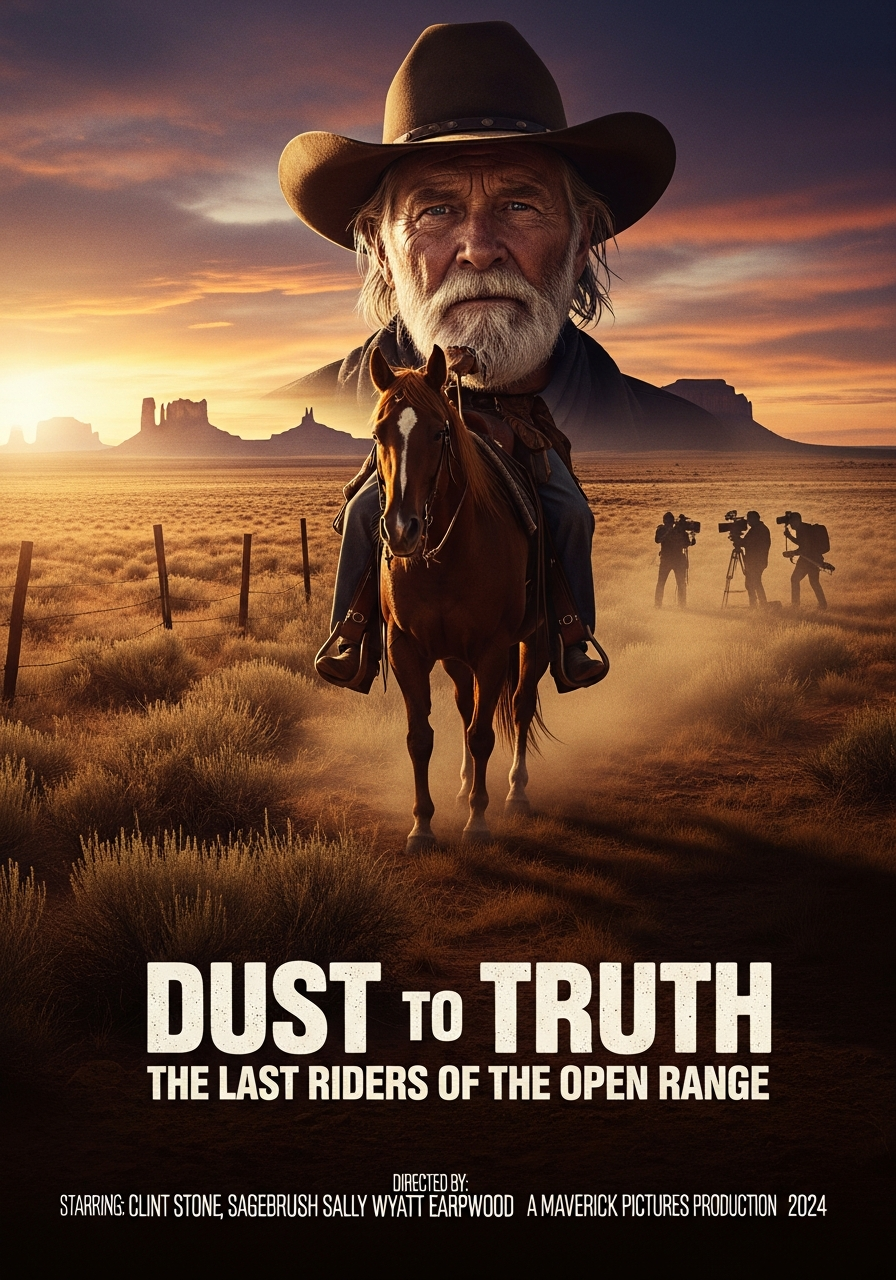
A cinematic poster featuring an aging cowboy with a weathered face, white stubble, and sun-cracked eyes astride a dusty horse on a vast high-desert plain at sunset. Rolling sage, rusted fence posts, and distant buttes under a fiery orange-purple sky. The documentary crew’s silhouette with cameras stands far behind him. Color palette: earthy browns, scorched golds, and deep shadows. Lighting: dramatic late-day sun casting long silhouettes. Mood: somber, reflective, and tense. Visual style: gritty realism with subtle film-grain texture reminiscent of classic Western photography.