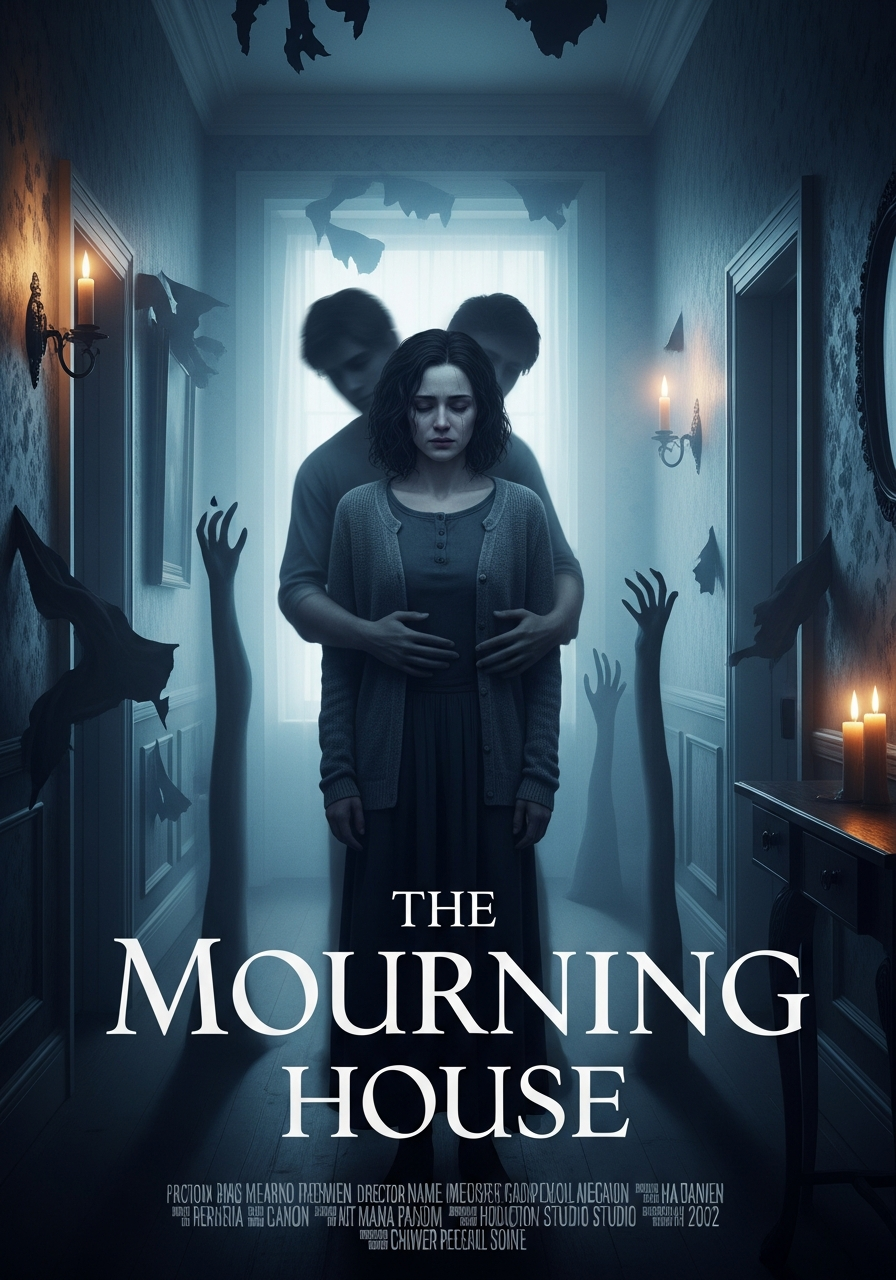
The Mourning House
8/10A shy widow falls in love with the ghost haunting her home—only to realize the entity is growing stronger by feeding on her grief, and will kill anyone who tries to pull her from its arms.
A fresh, emotionally driven twist on the haunted‑house trope with strong commercial and dramatic potential, though its niche tone may slightly limit mass appeal.
When quiet, soft‑spoken librarian Maeve Corbin moves into a dilapidated Victorian home after her husband's sudden death, she begins hearing footsteps that match her late spouse’s old rhythms. Soon, a ghostly figure appears—gentle, apologetic, and eerily familiar. It comforts her through sleepless nights, rekindling an intimacy she thought she’d lost forever. Against her better judgment, Maeve lets herself fall for the presence that shares her bed in the dark.
As the weeks pass, the ghost becomes possessive. Friends who check on Maeve experience violent, unseen attacks. Old photographs in the house shift to show a stranger wearing her husband's face. A local historian reveals the spirit belongs not to Maeve’s husband but to the sorrow‑hungry revenant that has haunted the property for over a century, mimicking the lost loves of lonely occupants to bind them to their grief. Terrified yet conflicted, Maeve must confront whether she loves her husband’s memory—or the monster wearing it.
With the house sealing its doors and the ghost begging her to choose eternity with it, Maeve stages a desperate confrontation. She burns her husband's belongings, depriving the revenant of the grief it feeds upon. The spirit becomes monstrous as it starves, and Maeve escapes only by rejecting the illusion of her past. Standing in the dawn light as the house collapses, she mourns again—but this time for herself, finally free.
A pale, sorrow‑stricken woman in her mid‑30s with dark curls and a worn cardigan stands in a dim Victorian hallway. Behind her, a translucent male figure with blurred features wraps ghostly arms around her waist, half‑comforting, half‑possessing. The wallpaper is peeling, shadows stretch unnaturally, and the house seems almost alive. Cool blues, greys, and faint amber candlelight create a melancholic, haunted tone. Style reminiscent of elevated horror posters: atmospheric, moody, minimalistic, with soft fog and chiaroscuro lighting.